Table of Contents
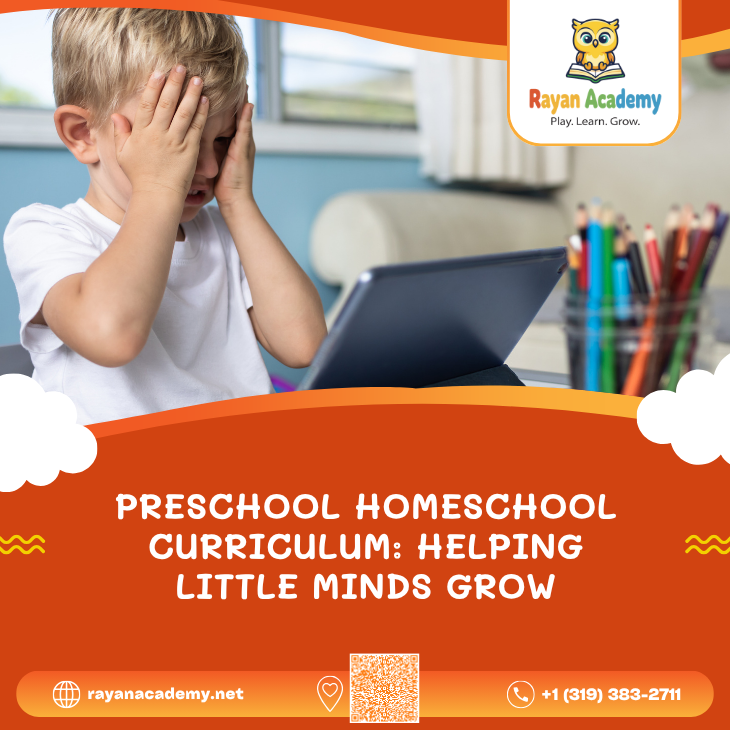
Preschool Homeschool Curriculum: Helping Little Minds Grow
Choosing a preschool homeschool curriculum is one of the most meaningful decisions you can make for your child’s early years. Whether you’re a first-time parent exploring educational paths or a seasoned homeschooling family looking for fresh ideas, understanding what makes an effective early learning framework matters deeply.
The preschool years — roughly ages three through five — are when children develop foundational skills in language, math, social interaction, and emotional regulation. A thoughtful homeschool preschool curriculum honors this critical window by balancing structured learning with the freedom to explore, create, and play.
For families in Coralville and Iowa City, there are wonderful options to support this journey, including centers like Rayan Academy that offer a hands-on learning approach rooted in the same principles many homeschool families value.
In this guide, we’ll walk through everything you need to know — from the essential building blocks of a preschool curriculum for homeschool families to practical tips for choosing the best approach for your unique child.
What Is a Preschool Homeschool Curriculum?
A preschool homeschool curriculum is a structured yet flexible educational plan designed for children ages three to five, led primarily by parents or caregivers at home. Unlike a rigid classroom model, it allows families to tailor learning to their child’s pace, interests, and developmental needs.
At its core, a strong homeschool preschool curriculum covers key developmental areas: early literacy, numeracy, social-emotional skills, fine and gross motor development, science exploration, and creative expression. The beauty of homeschooling at the preschool level is that much of this learning happens naturally — through play, daily routines, and intentional activities woven into everyday life.
It’s important to understand that a preschool curriculum for homeschool doesn’t need to look like a traditional classroom. There are no desks or worksheets required. Instead, it’s about creating an environment where your child feels safe to ask questions, try new things, and discover the world at their own pace.
Why More Parents Are Choosing a Homeschool Preschool Curriculum
Across the country — and right here in Iowa City and Coralville — more families are embracing the homeschool path for their youngest learners. Here’s what’s driving that shift.
Flexibility and Personalized Pacing
Every child develops differently. Some three-year-olds are ready to recognize letters, while others are still building the fine motor skills needed to hold a crayon. A homeschool curriculum for preschool allows you to:
- Follow your child’s lead — moving faster in areas of strength and spending more time where they need support
- Adapt the daily schedule to match your family’s rhythm, whether that means morning lessons or afternoon explorations
- Incorporate real-life learning — cooking together teaches math, and a walk outside becomes a science lesson
This kind of individualized attention is something professional early education centers also prioritize. At Rayan Academy, for example, teachers design activities around each child’s unique developmental stage, which mirrors the personalized approach many homeschool families strive for.
Stronger Emotional Foundations
Young children thrive when they feel secure. The home environment offers a natural sense of safety, which helps children take emotional risks — like trying a new activity or expressing a feeling for the first time.
A well-designed preschool homeschool curriculum intentionally builds emotional intelligence through storytelling, role play, and guided conversations about feelings. These experiences help children develop empathy, self-regulation, and the confidence they’ll need when they eventually enter a group learning setting.
Real-World Learning Opportunities
One of the greatest advantages of homeschooling preschoolers is that the entire world becomes a classroom. Grocery stores teach counting and sorting. Parks offer lessons in nature and physical development. Library visits foster a love of reading that lasts a lifetime.
This kind of experiential learning is deeply effective for young children, whose brains are wired to learn through sensory experiences and hands-on exploration.
Key Components of the Best Preschool Homeschool Curriculum
If you’re searching for the best homeschool preschool curriculum, look for one that addresses the whole child — not just academic readiness, but emotional, social, and physical growth too.
Early Literacy and Language Development
Literacy doesn’t start with reading — it starts with listening, speaking, and being surrounded by language-rich experiences. The best preschool homeschool curriculum builds literacy through:
- Read-alouds and storytelling — aim for at least 15–20 minutes of shared reading daily
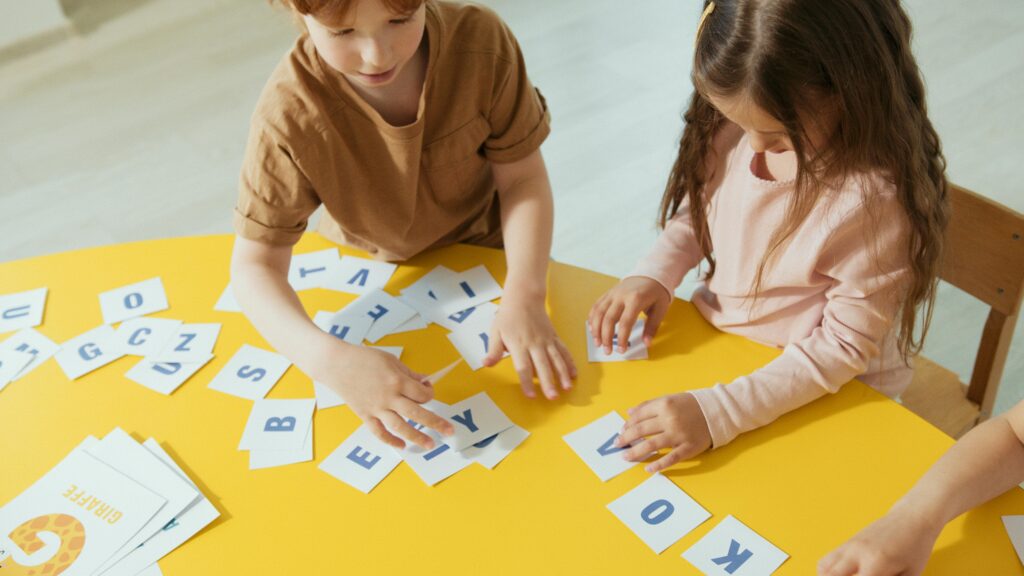
- Letter recognition games — think magnetic letters on the fridge, alphabet puzzles, and letter hunts around the house
- Rhyming and phonics play — songs, nursery rhymes, and word games develop phonemic awareness naturally
- Conversation and vocabulary building — asking open-ended questions during everyday activities expands language skills organically
Math and Logical Thinking
Preschool math isn’t about worksheets. It’s about building number sense through concrete, hands-on experiences.
Count steps as you climb them. Sort laundry by color. Build patterns with blocks. Measure ingredients while baking. These everyday moments lay the groundwork for mathematical thinking in ways that feel like play — because, for young children, play is the most powerful form of learning.
Social-Emotional Learning
This is where many parents worry about homeschooling — will my child develop strong social skills? The answer is absolutely yes, with intentional effort.
A strong homeschool curriculum for preschool includes regular opportunities for social interaction, whether through playdates, co-op groups, community classes, or part-time enrollment at a local early education center.
Programs like the preschool and Pre-K options at Rayan Academy offer excellent opportunities for homeschool families who want their children to benefit from peer interaction and group learning in a structured, nurturing setting.
Creative and Sensory Play
Art, music, water play, sand tables, playdough, and nature exploration all fall under creative and sensory learning.
These activities aren’t just fun — they strengthen fine motor skills, encourage problem-solving, and support cognitive development.
A playing preschool homeschool curriculum that prioritizes sensory-rich experiences helps children process the world around them in deeply meaningful ways.
Playing Preschool Homeschool Curriculum: Why Play Is the Foundation
If there’s one thing child development experts agree on, it’s this: young children learn best through play. A playing preschool homeschool curriculum doesn’t mean learning takes a backseat — it means learning takes center stage in the most developmentally appropriate way possible.
Types of Play-Based Learning Activities
Play-based learning comes in many forms, each serving a unique developmental purpose:
- Dramatic play (dress-up, pretend kitchens, puppet shows) builds language, social skills, and emotional understanding
- Constructive play (blocks, LEGOs, building forts) develops spatial awareness and early engineering thinking
- Sensory play (water tables, sandbox activities, finger painting) strengthens neural connections and fine motor control
- Physical play (running, climbing, dancing) supports gross motor development and self-regulation
- Cooperative play (group games, turn-taking activities) teaches teamwork, patience, and communication
How Play Builds School Readiness
It might seem counterintuitive, but children who spend their preschool years engaged in rich, play-based learning often enter kindergarten more prepared than those who spent time on formal academics too early.
Research consistently shows that play develops executive function skills — attention, working memory, and flexible thinking — which are the true predictors of long-term academic success.
When you build your preschool curriculum around play, you’re not taking a shortcut. You’re giving your child the strongest possible foundation for everything that comes next.
How to Choose the Best Homeschool Preschool Curriculum
With so many options available, choosing the best preschool homeschool curriculum can feel overwhelming. Here are three guiding principles to simplify your decision.
1. Consider Your Child’s Learning Style
Does your child love books and stories? They may respond well to a literature-based curriculum. Do they need to move and touch everything? Look for a hands-on, Montessori-inspired approach. Observing how your child naturally explores the world is the best starting point for choosing a curriculum that will genuinely engage them.
2. Look for Balance Between Structure and Freedom
The best homeschool preschool curriculum provides a gentle framework — enough structure to build consistent learning habits, but enough flexibility to follow your child’s curiosity. Avoid overly rigid programs that don’t leave room for spontaneous discovery, and be cautious of approaches that offer no structure at all.
3. Evaluate Social Interaction Opportunities
No preschool curriculum — homeschool or otherwise — is complete without social experiences. Look for ways to build community into your routine. Local programs, library story times, and part-time enrollment at early education centers can all fill this need beautifully.
For families in Coralville and Iowa City, flexible scheduling options — like the half-day and part-time programs offered by local providers — make it easy to combine homeschool learning with structured group experiences.
Read more about: Heartfelt Gift Ideas for Preschoolers Graduation Day
When Homeschool Meets Professional Early Education
Many families discover that the ideal approach isn’t purely homeschool or purely center-based — it’s a thoughtful combination of both. A part-time preschool program can complement your homeschool preschool curriculum by providing expert-led group activities, peer socialization, and a consistent routine that reinforces what you’re teaching at home.
At Rayan Academy in Coralville, families have access to flexible half-day and full-day programs designed around play-based, child-centered learning — the same philosophy that drives the most effective homeschool approaches. Experienced teachers guide children through early literacy, math exploration, creative arts, and outdoor play in a warm, safe environment that feels like an extension of home.
Whether your child attends two mornings a week or joins a full-time program, blending homeschool with professional early education gives your child the best of both worlds: personalized family-led learning and the social, emotional, and academic benefits of a quality preschool setting.
Start Your Child’s Learning Journey with Confidence at Rayan Academy
Choosing a preschool homeschool curriculum is a deeply personal decision — and there’s no single right answer. What matters most is that your child feels loved, supported, and excited to learn every day.
If you’re exploring options in Coralville or Iowa City, we invite you to schedule a tour at Rayan Academy to see firsthand how a nurturing, play-based environment can complement your family’s educational goals. With experienced teachers, transparent pricing, flexible schedules, and a deep commitment to every child’s unique growth, Rayan Academy is here to support your family — however your learning journey looks.
You can also explore enrollment options to find the schedule and program that fits your child best.
Frequently Asked Questions
1. What should a preschool homeschool curriculum include?
A well-rounded preschool homeschool curriculum should cover early literacy, math concepts, social-emotional skills, creative arts, physical activity, and sensory exploration. The most effective programs balance structured activities with plenty of open-ended play, allowing children to learn at their own developmental pace.
2. At what age should I start a homeschool preschool curriculum?
Most families begin a structured preschool curriculum around age three, though informal learning naturally starts much earlier. If your child shows curiosity about letters, numbers, or the world around them, they’re ready for gentle, play-based learning experiences.
3. Can I combine homeschooling with a part-time preschool program?
Absolutely. Many families in Iowa City and Coralville blend homeschool learning with part-time enrollment at early education centers like Rayan Academy. This approach gives children the benefit of personalized home instruction alongside structured socialization and group learning activities.
4. How do I make sure my homeschooled preschooler develops social skills?
Social development happens through regular interaction with peers and trusted adults. Playdates, community classes, co-op groups, and part-time preschool programs all provide meaningful opportunities for children to practice sharing, communication, and teamwork.
5. What makes a play-based preschool curriculum effective?
Play-based learning is backed by decades of research showing that young children develop stronger cognitive, social, and emotional skills through hands-on exploration. Activities like dramatic play, building, art, and outdoor adventures teach critical thinking, creativity, and resilience in ways that feel natural and joyful.
Conclusion
The early years of your child’s life are filled with extraordinary potential. A thoughtfully chosen preschool homeschool curriculum can unlock that potential by honoring the way young children naturally learn — through play, curiosity, connection, and real-world exploration.
Whether you choose to teach entirely at home, partner with a professional early education center, or create a blend uniquely suited to your family, the most important thing is that your child feels safe, supported, and inspired every single day.
For families in Coralville and Iowa City, Rayan Academy stands as a trusted partner in early childhood education — offering the kind of warm, play-based, individualized learning that gives children the strongest possible start. Your child’s brightest days are ahead, and they begin with the choices you make today.