Table of Contents
Preschool Ages: Is Your 3 to 5-Year-Old Ready to Learn?
As a parent, few decisions feel as significant as choosing when your child is ready to step into a classroom for the first time. You’ve probably found yourself searching “what age is preschool?” or wondering about the best age to start preschool — and you’re certainly not alone. These questions sit at the heart of every family’s early education journey, and the answers matter more than most people realize.
The preschool years represent one of the most transformative periods in a child’s life. Between the ages of three and five, children undergo rapid cognitive, emotional, and social development that lays the foundation for everything that follows. Understanding preschool ages — and knowing what to look for in a quality program — empowers you to make a choice that truly serves your child’s growth.
For families in Coralville and Iowa City, finding a daycare center that understands these developmental milestones and creates a nurturing space for young learners is essential. At Rayan Academy, children in the preschool age range experience a thoughtfully designed environment where curiosity, creativity, and confidence are nurtured every single day. Whether you’re just beginning to think about preschool or you’re actively comparing options, this guide will walk you through everything you need to know.
What Age Is Preschool? Breaking Down the Preschool Age Range
One of the most common questions parents ask is simply: what age do kids start preschool? The answer is more nuanced than a single number, because the preschool age range spans a few critical years of development — and every child enters that window at their own pace.
The Standard Age Group for Preschool
The most widely accepted preschool age range is three to five years old. This is the window during which most early education programs accept children, and it aligns with key developmental stages that make structured learning both appropriate and beneficial. In most states, including Iowa, the age for preschool enrollment begins at three, with children transitioning to kindergarten around age five or six.
To clarify what age preschool and kindergarten typically correspond to:
- Early preschool age (2.5–3 years): Some programs accept younger children who demonstrate readiness, often in transitional or early preschool classrooms.
- Preschool (3–4 years): The core preschool experience, focused on socialization, play-based learning, and foundational skills.
- Pre-K (4–5 years): A more structured program designed to prepare children directly for kindergarten entry.
- Kindergarten (5–6 years): The first year of formal schooling in most districts.
At Rayan Academy, the Preschool & Pre-K program is designed specifically for children ages three through five, offering age-appropriate experiences that build toward school readiness while keeping the joy of learning front and center.
What About Starting Before Age Three?
Many parents wonder what age you start preschool if your child seems advanced or if your family needs earlier care. While the traditional preschooler age begins at three, high-quality infant and toddler programs can provide structured learning experiences well before that milestone.
These early environments typically focus on three critical areas:
- Sensory exploration — helping babies and toddlers make sense of the world through touch, sound, sight, and movement.
- Language development — building vocabulary and communication through songs, stories, and responsive interactions.
- Emotional bonding — creating secure attachments with caregivers that build the trust children need to eventually thrive in a classroom setting.
Each of these areas creates a smoother transition into preschool when the time comes. For families seeking care from as early as six weeks, Rayan Academy offers dedicated infant and toddler care programs that provide a warm, nurturing start before children reach the typical age to start preschool.
How Do You Know Your Child Is Ready for Preschool?
Knowing the ages for preschool is one thing — understanding whether your individual child is ready is another. Readiness isn’t solely about hitting a number on the calendar. It’s a combination of developmental, emotional, and social factors that vary from child to child.
Developmental Signs to Watch For
Child development researchers have identified several indicators that a child may be ready for a preschool setting. Rather than a rigid checklist, think of these as areas to observe holistically.
1. Communication and language form the foundation of classroom participation. A child who can express basic needs, follow simple two-step instructions, and engage in short conversations is typically ready for the preschool environment. This doesn’t mean they need to speak in full paragraphs — even emerging language skills benefit enormously from the immersive social setting preschool provides.
2. Motor skills also play an important role. Children entering preschool generally can:
- Hold a crayon and make deliberate marks on paper
- Turn pages in a book with increasing control
- Manage basic self-care like washing hands, pulling on shoes, or using the bathroom with some independence
These skills aren’t strict prerequisites so much as indicators that a child’s body and brain are developing in ways that align with preschool-level activities.
3. Curiosity and attention round out the picture. If your child shows interest in books, asks questions about the world around them, or can engage with an activity for five to ten minutes, those are strong signs that they’ll thrive in a structured early learning environment.
Emotional and Social Readiness
Perhaps the most important — and most overlooked — dimension of preschool readiness is emotional development. The right age to start preschool isn’t just about cognitive milestones. It’s about whether a child can manage the emotional experience of being in a group setting away from their primary caregivers.
What does emotional readiness actually look like in practice? Consider whether your child:
- Can separate from a parent without prolonged, inconsolable distress
- Shows a growing interest in playing alongside — or cooperatively with — other children
- Is beginning to demonstrate empathy, like noticing when a friend is upset or offering to share a toy
- Can express basic emotions using words or gestures rather than only through behavior
These social-emotional skills are exactly what quality preschool programs are designed to nurture and strengthen. At Rayan Academy, experienced teachers help children navigate these emotional transitions with patience and care. The focus on kindness, respect, and self-expression means that children don’t just learn academic basics — they develop the emotional intelligence that will serve them for years to come.
What Children Learn During the Preschool Years
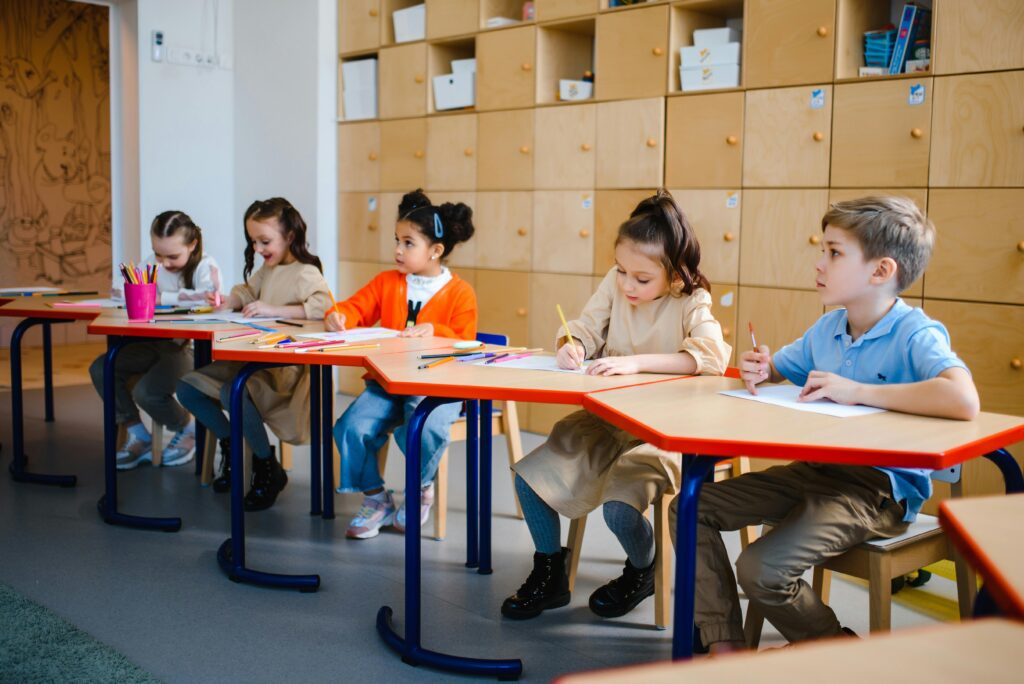
Parents often ask what preschool-aged children actually do all day. The answer goes far beyond finger painting and snack time — though both have their place. A well-designed preschool program addresses the whole child across multiple domains of development.
Play-Based Learning and Early Literacy
Research consistently shows that play-based learning is the most effective approach for the preschoolers’ age group. This isn’t just a philosophy — it’s science. When young children engage in guided play, learning happens across every developmental domain simultaneously.
Consider what’s happening when a four-year-old builds a block tower: they’re counting blocks (math), discussing their creation with a friend (language), managing frustration when it topples (emotional regulation), and rebuilding with a new strategy (problem-solving). A single play experience can address dozens of learning objectives without ever feeling like “work” to the child.
Through this approach, children develop key pre-academic skills:
- Pre-reading abilities like letter recognition, phonemic awareness, and print concepts
- Early math foundations including sorting, counting, patterns, and spatial reasoning
- Fine motor strength through art, building, writing practice, and sensory activities
- Scientific thinking driven by observation, experimentation, and asking “why?”
At Rayan Academy, the daily schedule reflects this philosophy. Morning huddles, learning lab activities, and play stations are all carefully structured to deliver educational outcomes through engaging, hands-on experiences. You can learn more about the curriculum and learning approach to see how each part of the day serves a developmental purpose.
Social Skills and Emotional Development
The preschool classroom is where many children have their first sustained experience navigating relationships outside their family. This isn’t a minor side benefit — it’s one of the most valuable outcomes of attending preschool during these formative years.
In a single morning, a preschool-aged child might negotiate who gets the red crayon first, comfort a classmate who misses their mom, collaborate on building a pretend spaceship, and practice waiting for their turn at the water table. Each of these moments builds critical social muscles that no amount of at-home learning can fully replicate.
Emotional development during the preschool ages is equally significant. Children at this stage are working through big internal milestones:
- Identifying and naming their emotions, learning strategies to calm down when they’re upset.
- Building self-confidence through small successes.
- Developing resilience when things don’t go their way.
Teachers who understand these processes create a classroom culture where every child feels safe to take risks, make mistakes, and grow.
Read more about: 5 Fun & Educational Counting Activities for Preschoolers
Choosing the Right Preschool in Coralville and Iowa City
Once you’ve determined that your child is approaching the right age for preschool, the next step is finding a program that aligns with your family’s values and your child’s needs. For parents in the Coralville and Iowa City area, several factors should guide your decision.
What to Look For in a Quality Program
Not all preschool programs are created equal, and the differences matter more than many parents initially realize. Here’s a practical framework for evaluating your options:
1. Start with safety and transparency. A trustworthy center welcomes questions, invites parents to visit, and maintains clear policies around health, supervision, and communication. Ask to see their safety protocols in writing. At Rayan Academy, health and safety practices are a core priority, giving families peace of mind from day one.
2. Evaluate the teaching team. Qualified, caring teachers make the difference between a place that simply watches children and one that actively supports their development. During your visit, observe how teachers interact with children — are they warm, engaged, and responsive?
Do they get down on a child’s level to listen? The teaching team at Rayan Academy includes dedicated lead teachers and classroom educators who specialize in specific age groups, ensuring that instruction is always developmentally appropriate.
3. Ask about scheduling flexibility. Whether you need half-day sessions, full-day care, or extended hours, having options makes balancing work, family, and your child’s educational needs far easier. Rayan Academy offers half-day, full-day, and extended-day schedules — plus after-school and summer care programs — so families can find exactly the right fit.
4. Examine the curriculum balance. The best preschool programs don’t choose between academics and play — they weave them together. Look for a daily routine that includes art, music, outdoor time, science exploration, collaborative projects, and quiet reading alongside structured literacy and math activities.
Why Local Matters
Choosing a preschool close to home or work isn’t just a convenience — it has real developmental benefits. Shorter commutes reduce transition stress for young children and leave more time for the morning and evening routines that provide stability. Stronger community connections mean your child may see familiar faces at the park, library, or grocery store, reinforcing their sense of belonging.
For families in the Iowa City and Coralville area, Rayan Academy’s location at 2251 1st Ave, Unit B, Coralville, IA 52241 serves families throughout the region with convenience and care. Being part of a local center also means easier access when you need to pick up early, attend a parent event, or simply check in during the day.
Your Child’s Bright Future Starts with a Single Step At Rayan Academy
Choosing a preschool is one of the most meaningful decisions you’ll make as a parent — and you don’t have to make it alone. At Rayan Academy, we welcome families to experience our classrooms firsthand, meet our teachers, and see how we create a joyful, safe space where children at every preschool age thrive.
Here’s what families can look forward to when they join the Rayan Academy community:
- Experienced educators who treat every child as an individual with unique strengths and needs
- A structured curriculum rooted in play-based learning and aligned with school readiness goals
- Transparent tuition with flexible scheduling options including half-day, full-day, and extended care
- Healthy meals and snacks that fuel growing minds and bodies throughout the day
- A warm, secure environment where children build confidence, friendships, and a lifelong love of learning
If you’re a parent in Coralville or Iowa City exploring preschool options for your child, we’d love to show you what makes Rayan Academy different. Schedule a tour to visit our center and see our classrooms in action, or explore enrollment options to begin your family’s journey with us today. Your child’s next great adventure is waiting.
Frequently Asked Questions About Preschool Ages
1. What is the best age to start preschool?
Most children are ready to begin preschool between ages three and four. However, the best age to start preschool depends on your child’s individual development — including their language skills, emotional readiness, and comfort in social settings. Some children thrive starting closer to three, while others benefit from waiting until four. Visiting a program and speaking with experienced teachers can help you gauge whether your child is ready.
2. How do I choose the right preschool for my child?
Start by identifying what matters most to your family, then evaluate centers against those priorities. Key factors to assess include safety protocols, teacher qualifications, curriculum philosophy, class sizes, scheduling flexibility, and communication practices. Visit the facility in person, observe how teachers interact with children, and trust your instincts — a program that feels warm and organized during your visit will likely feel that way to your child, too.
3. Will my child struggle with separation when starting preschool?
Some degree of separation anxiety is completely normal for preschool-aged children, and it usually resolves within the first few weeks. Quality centers have established routines and experienced teachers who help children adjust gradually. Three strategies that consistently help: keeping drop-off goodbyes short and confident, establishing a predictable morning routine, and giving your child something small from home (like a family photo) for comfort during the transition.
4. What should my child be learning in preschool?
A good preschool program addresses early literacy and numeracy, social skills, emotional regulation, creativity, and physical development — all through a combination of structured activities and guided play. By the end of the preschool years, most children can recognize letters and numbers, write their name, follow multi-step directions, and interact cooperatively with peers. These are the foundational skills that prepare them for a confident kindergarten entry.
5. How do I know if a daycare center is safe for my child?
Safety should be verifiable, not just promised. Ask specific questions about teacher-to-child ratios, supervision policies during indoor and outdoor time, health and hygiene protocols, emergency procedures, and how the center communicates with parents throughout the day. Request to see their licensing status and any accreditation documentation. A truly safe center will welcome these questions openly and have clearly documented, accessible policies for every family to review.
Conclusion
Understanding preschool ages and what they mean for your child’s development is the first step toward making a confident, informed choice about early education. The years between three and five are filled with extraordinary growth — in language, social skills, emotional resilience, and cognitive ability — and the right preschool environment can make all the difference in how that growth unfolds.
For families in Coralville and Iowa City, Rayan Academy offers a trusted, nurturing space where children in the preschool age range discover the joy of learning in an environment built around safety, quality, and genuine care. From experienced teachers who know each child by name to a curriculum that balances play with purposeful learning, every detail is designed to help your little one shine.
The early years go by quickly. Giving your child a strong, joyful start is one of the greatest gifts you can offer — and it all begins with finding the right place to grow.