Table of Contents
Best Feeding Bottle for Infants: A Complete Guide for Parents
Few decisions feel as personal — or as overwhelming — as choosing the best feeding bottle for infants. Whether you’re a first-time parent navigating the bottle aisle for the first time or welcoming a second child with entirely new preferences, the sheer number of options can leave you second-guessing every choice. From nipple shapes and flow rates to bottle materials and anti-colic features, each detail matters when it comes to your baby’s comfort and nutrition.
The truth is, the right feeding bottle isn’t just about convenience. It plays a direct role in your infant’s feeding experience, digestion, and even early oral development. Understanding what to look for — and why — can take the stress out of this important choice and set the stage for calm, bonding-rich feeding sessions.
At Rayan Academy, a trusted early education center in Coralville and Iowa City, Iowa, our caregivers work closely with families every day to support healthy infant routines, including feeding. Our infant and toddler care programs are built on the belief that every detail of a child’s day — from learning to lunchtime — shapes their growth. This guide draws on that hands-on experience to help you find the best feeding bottle for your little one.
Why Choosing the Best Feeding Bottle for Infants Matters
Selecting a bottle may seem simple, but the wrong choice can lead to fussiness, excess gas, feeding refusal, or nipple confusion for breastfed babies. A well-chosen bottle, on the other hand, supports smooth milk flow, comfortable latch, and a positive feeding experience from the earliest weeks of life.
Impact on Digestion and Comfort
Infants have immature digestive systems. Bottles with poor venting or inappropriate nipple flow can cause your baby to swallow excess air, leading to gas, spit-up, and general discomfort. Anti-colic bottles with built-in air vents are specifically designed to minimize this problem.
Here’s what to watch for — these signs often indicate your baby may need a different bottle:
- Excessive fussiness during or after feeding — this is one of the most common signals of air ingestion or flow rate issues, and it’s easy to mistake for general irritability.
- Frequent spit-up beyond normal levels — while some spit-up is expected, consistent overflows may indicate the nipple flow is too fast for your baby’s swallowing pace.
- Refusing the bottle entirely — the nipple shape, material, or even the temperature of the silicone may feel unfamiliar or uncomfortable to your little one.
- Taking unusually long to finish a feeding — if a session stretches well beyond 20–30 minutes, the flow rate may be too slow for their developmental stage.
Supporting the Breastfeeding Journey
For families combining breast and bottle feeding, choosing the best baby feeder bottle for infants with a breast-like nipple shape can reduce the risk of nipple confusion. Many modern bottles feature wide-base, soft silicone nipples that mimic the natural latch, making the transition between breast and bottle smoother for both parent and baby.
The table below breaks down how different nipple styles compare for breastfed babies:
| Nipple Feature | Best For | Key Benefit |
|---|---|---|
| Wide base, rounded shape | Breastfed infants transitioning to bottle | Mimics natural latch, reduces confusion |
| Narrow, traditional shape | Formula-fed infants comfortable with bottles | Easy to clean, widely available |
| Textured silicone surface | Babies who reject smooth nipples | Feels more natural against baby’s palate |
| Anti-collapse design | Infants with weak latch or suction | Maintains shape during feeding, prevents frustration |
Choosing the right nipple style is just as important as the bottle itself — and often makes the biggest difference in whether your baby accepts the bottle happily.
What to Look for in the Best Baby Feeder Bottles for Infants
Not all bottles are created equal, and what works beautifully for one baby may not suit another. However, certain features consistently make a difference across the board.
Material: Glass vs. Plastic vs. Silicone
Each material comes with distinct advantages and trade-offs. The comparison below can help you decide which fits your family’s lifestyle:
| Feature | Glass | BPA-Free Plastic | Silicone |
|---|---|---|---|
| Durability | High (but breakable) | High | Moderate |
| Weight | Heavier | Lightweight | Lightweight |
| Chemical Safety | No leaching risk | BPA-free; safe when certified | No leaching risk |
| Ease of Cleaning | Excellent; resists staining | Good; may discolor over time | Good; requires thorough drying |
| Best Setting | Home use | Daycare and on-the-go | Parents seeking a soft, flexible option |
| Cost | Higher upfront | Most affordable | Mid-range |
Many families in the Coralville and Iowa City area find that owning a mix — glass for home and BPA-free plastic for daycare — offers the best of both worlds.
Nipple Shape and Flow Rate
The nipple is arguably the most important component of any feeding bottle. A slow-flow nipple is typically recommended for newborns and young infants because it prevents them from gulping milk too quickly. As your baby grows and their sucking strength increases, you can gradually move to medium and then fast-flow nipples.
The following progression shows how flow stages typically align with your baby’s age:
Flow Stage Timeline
- Stage 1 → Preemie / Slow Flow (Newborn – ~3 months): Designed for the smallest feeders; prevents choking and overfeeding.
- Stage 2 → Medium Flow (~3 – 6 months): Matches growing suction strength; supports longer, more satisfying feeds.
- Stage 3 → Fast Flow (6+ months): Allows efficient feeding for older infants with strong jaw muscles.
- Stage 4 → Variable Flow (6+ months, combination feeders): Lets baby control speed by adjusting latch position — ideal for babies who also breastfeed.
Choosing the right flow rate prevents overfeeding, reduces colic symptoms, and keeps feeding time comfortable rather than stressful. When in doubt, start with a slower flow and move up only when your baby shows signs of frustration or extended feeding times.
Anti-Colic and Venting Systems
Colic affects up to 25% of infants, and while a bottle alone won’t cure it, the right design can significantly reduce air intake. There are three primary venting approaches available on the market today:
- Internal vent systems — a straw-like tube inside the bottle channels air away from the milk, preventing bubble formation. These are highly effective but have more parts to clean.
- Bottom-vent designs — air enters through a valve at the base of the bottle, keeping it completely separate from the milk pathway. These tend to be the most leak-proof option.
- Angled bottle designs — the bottle itself is shaped at an angle so milk naturally pools near the nipple, reducing the amount of air your baby can swallow even without a complex vent system.
These features are especially valuable during the first four months, when colic symptoms tend to peak. If your baby is particularly gassy or fussy, experimenting with a dedicated anti-colic bottle is well worth the effort.
Best Position for Bottle Feeding Infant: Getting It Right
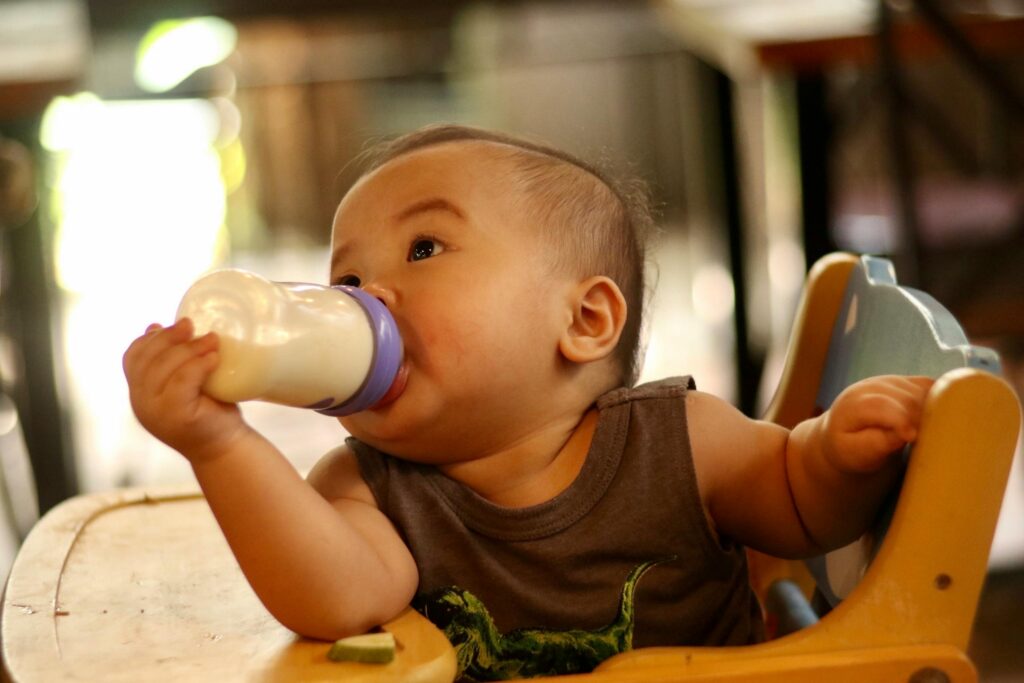
Even the best feeding bottles for infants won’t perform well if the feeding position isn’t right. How you hold your baby during bottle feeding directly impacts digestion, comfort, and bonding.
Paced Bottle Feeding: The Recommended Approach
Pediatric feeding specialists widely recommend paced bottle feeding, which mimics the natural rhythm of breastfeeding and gives your infant more control over their intake. Follow these steps for a calm, responsive feeding experience:
- Settle your baby in a semi-upright position — their head should be comfortably higher than their stomach, cradled in the crook of your arm or supported in your lap. Never feed a baby lying flat.
- Hold the bottle nearly horizontal — tilt it just enough so that milk fills the nipple without air gaps, but avoid letting gravity force milk down too quickly.
- Let your baby initiate the latch — brush the nipple gently against their lower lip and wait for them to open wide and draw it in, rather than pushing the nipple into their mouth.
- Pause every two to three minutes — lower the bottle slightly or remove it briefly to let your baby rest, swallow, and recognize natural fullness cues.
- Switch sides midway through — just as you would while breastfeeding, alternating the arm you hold your baby in supports balanced visual and motor development.
- Follow your baby’s lead to end the feeding — turning away, slowing their sucking, or releasing the nipple are all signs they’re done. Never force the last ounce.
This method helps prevent overfeeding, reduces gas, and supports the development of healthy self-regulation around eating — skills that benefit your child far beyond infancy.
Positions to Avoid
Not all feeding positions are safe. Being aware of what to avoid is just as important as knowing what to do:
- Lying flat on their back — this increases the risk of ear infections (as milk can pool near the Eustachian tubes) and raises the chance of choking.
- Propping the bottle unattended — besides being a choking hazard, this removes the crucial bonding element that feeding time provides. Every session is an opportunity for eye contact, quiet conversation, and closeness.
- Feeding in a car seat or bouncer — the reclined angle of most car seats doesn’t support safe swallowing, and the straps can restrict your baby’s ability to turn away when full.
At Rayan Academy, our trained caregivers follow safe, responsive feeding practices for every infant in our care. We understand that feeding is about far more than nutrition — it’s one of the earliest ways babies learn to trust their world. You can learn more about our commitment to safe routines by visiting our health and safety practices page.
How Daycare Providers Support Healthy Feeding Habits
When your infant begins attending daycare, their feeding routine becomes a shared responsibility. This is where the quality of your childcare provider truly shows.
What to Expect from a Quality Infant Program
A trustworthy daycare center will ask about your baby’s feeding schedule, preferred bottles, and any dietary needs before the first day. Caregivers should be trained in safe bottle feeding techniques, including paced feeding and proper bottle warming methods.
The following checklist highlights what sets excellent infant feeding care apart from the rest:
| Quality Indicator | What It Looks Like in Practice |
|---|---|
| Individualized feeding schedules | Caregivers follow your baby’s hunger cues rather than feeding all infants at the same fixed time |
| Daily parent communication | Written or digital reports detailing how much your baby ate, when, and how they responded |
| Strict hygiene protocols | Labeled bottles, proper warming (never microwaved), thorough sterilization, and safe storage |
| Calm feeding environment | A quiet, distraction-free area where caregivers hold each baby during bottle feeding |
| Responsive caregiver ratios | Low infant-to-teacher ratios ensure every baby receives attentive, unhurried feeding support |
At Rayan Academy, our infant program serves children from six weeks of age, and we treat each feeding moment as an opportunity for connection and developmental support. Our educators understand that a baby who feels safe and attended during meals develops stronger emotional security — a foundation that supports learning for years to come.
Feeding, Nutrition, and Early Development: The Bigger Picture
Choosing the best feeding bottle for infants is one piece of a larger puzzle. Nutrition during the first year of life fuels rapid brain development, physical growth, and the emergence of social and emotional skills.
Building Healthy Routines Early
Consistent, responsive feeding helps infants develop a sense of predictability and trust. When a baby learns that their hunger will be met with warmth and attention, they build what developmental psychologists call secure attachment — the emotional base from which all future learning and relationships grow.
This is also why the environment surrounding mealtimes matters so much. A noisy, chaotic feeding experience feels very different to a baby than a calm, attentive one. Quality infant care programs prioritize peaceful feeding spaces, gentle transitions, and caregivers who are fully present during every bottle.
These aren’t small details — they’re the building blocks of emotional well-being that influence how confidently a child explores the world in their toddler and preschool years.
Read more about: Infant Day Care: Helping Your Baby Thrive from Day One
Transitioning from Bottle to Solids
As your baby approaches six months, you’ll begin introducing solid foods alongside bottle feeding. This transition is gradual, and the bottle remains a primary source of nutrition well into the first year. Here’s a general timeline of what this journey typically looks like:
Feeding Milestone Progression
- 0–6 Months → Breast milk or formula via bottle is the sole nutrition source. Focus on finding the best baby feeder bottles for infants that support comfortable, paced feeding.
- 6–8 Months → Introduction of single-ingredient purees alongside continued bottle feeding. Bottles with clear volume markings help track intake as solids increase.
- 8–10 Months → Soft finger foods join the rotation. Bottle feeding continues but may gradually decrease in frequency.
- 10–12 Months → Sippy cup introduction begins. The bottle remains important but the shift toward cup drinking starts.
- 12+ Months → Pediatricians generally recommend weaning off bottles by 12–18 months to support dental health and self-feeding skills.
Rayan Academy’s learning approach extends to everyday routines, including mealtimes. Our educators gently guide older infants and toddlers through food exploration, helping them develop healthy attitudes toward eating that last a lifetime.
Ready to Give Your Child the Best Start at Rayan Academy?
If you’re a parent in Coralville or Iowa City searching for a daycare that genuinely cares about every aspect of your child’s day — from safe bottle feeding to joyful play-based learning — we’d love for you to see Rayan Academy firsthand.
Our experienced teachers, flexible scheduling options, and nurturing environment are designed to support your family at every stage — starting from just six weeks of age. Here’s a snapshot of what we offer:
| Program | Ages Served | Schedule Options |
|---|---|---|
| Infants & Toddlers | 6 weeks – 2 years | Half Day, Full Day, Extended Day |
| Preschool & Pre-K | 3 – 5 years | Half Day, Full Day, Extended Day |
| After School & Summer Care | School-age children | Flexible afternoon and seasonal options |
With transparent pricing, a structured curriculum built around your child’s developmental needs, and the kind of warm, trusting partnerships with parents that make all the difference — Rayan Academy is a place where little ones truly thrive.
Come see the classrooms, meet our team, and discover why families across the Iowa City area trust Rayan Academy with their littlest learners. Schedule a tour today — we can’t wait to welcome you.
Frequently Asked Questions
1. What is the best feeding bottle for infants who are also breastfeeding?
Look for bottles with wide-base, slow-flow nipples made from soft silicone that closely mimic the natural breast shape. These help reduce nipple confusion and make switching between breast and bottle easier. Many lactation consultants specifically recommend paced bottle feeding alongside these bottles to keep the experience consistent for your baby.
2. How often should I replace my baby’s feeding bottles and nipples?
Inspect bottles and nipples regularly for cracks, discoloration, thinning, or sticky textures. Most manufacturers recommend replacing nipples every two to three months and bottles every four to six months. If you notice any damage sooner — especially bite marks on nipples once teeth emerge — replace them immediately.
3. What is the best position for bottle feeding an infant?
Hold your baby in a semi-upright position with their head slightly elevated above their stomach. Use paced feeding techniques — keeping the bottle nearly horizontal and pausing every few minutes — to prevent overfeeding, reduce gas, and allow your baby to recognize their own fullness cues naturally.
4. Does Rayan Academy follow specific feeding guidelines for infants in their care?
Yes. Rayan Academy follows individualized feeding plans for every infant, created in partnership with parents. Our caregivers use safe bottle handling practices, responsive paced feeding techniques, and communicate daily about feeding times and intake. You can explore our infant care programs for more details.
5. At what age does Rayan Academy begin accepting infants?
Rayan Academy welcomes infants starting at six weeks of age. Our infant and toddler program provides a warm, secure environment where little ones receive attentive, personalized care throughout every part of their day — from feeding and napping to sensory play and early bonding experiences.
Conclusion
Choosing the best feeding bottle for infants is a meaningful decision, but it doesn’t have to be a stressful one. By understanding your baby’s unique needs — from nipple flow rates and bottle materials to proper feeding positions and anti-colic features — you can create a feeding experience that’s comfortable, nourishing, and full of connection.
Remember that feeding is one of the first ways your baby experiences love and security. Whether at home or in a quality daycare setting, the care and attention that surrounds each feeding session shapes your child’s emotional well-being and lays the groundwork for healthy development in the months and years ahead.
For families in Coralville and Iowa City, Rayan Academy is here to be a trusted partner in your child’s earliest years. From responsive infant care and safe feeding practices to engaging preschool, pre-K, and after-school programs, every detail of our approach is designed to help your child learn, grow, and thrive — one happy day at a time.